


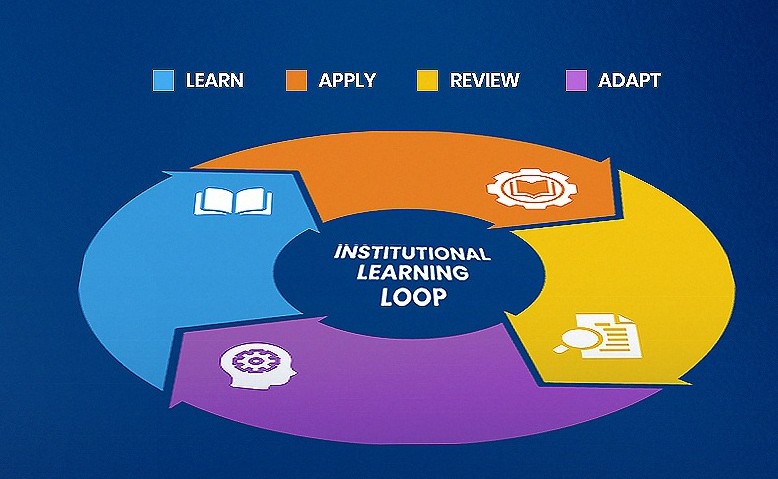
Most transformation programmes do not fail because the strategy is weak. They fail because the institution overestimates its readiness to execute. The launch looks confident, the language is strong, and the intentions are clear. Then delivery begins and the friction appears: decisions stall, responsibilities overlap, numbers do not reconcile, and momentum drains into meetings that produce activity rather than progress.
This is not a motivation problem. It is an operating system problem.
Across sectors, evidence on change programmes is consistent: around 70% of transformations do not fully achieve their intended outcomes. The pattern is familiar. Organisations move quickly to announce the change, but they delay the unglamorous work that makes change possible. They treat readiness as enthusiasm, when readiness is capability.
Readiness is built on four foundations.
First is governance clarity. The institution must be able to make decisions quickly and defensibly. Who approves what, and how fast? What is escalated, and to whom? What evidence is required for high-stakes decisions? When governance is vague, every decision becomes a negotiation, and the programme slows down even as effort increases.
Second is defined roles. Transformation collapses when ownership is “shared”. Shared often means duplicated work in some areas, abandoned tasks in others, and conflict when outcomes fall short. Readiness means one clear owner per outcome, with simple handoffs between teams. If you cannot explain who owns the result in one sentence, the organisation is not ready to scale the work.
Third is reliable data. Every transformation becomes a data programme, whether leaders plan for it or not. If baselines are unclear, improvement cannot be proven. If teams use different definitions, performance cannot be compared. If numbers cannot be traced to a source, the institution loses confidence in its own reporting. Readiness does not require perfect data, but it does require stable definitions, named data owners, and a single place where the truth lives.
Fourth is aligned incentives. This is where many programmes quietly fail. If leaders speak about transformation but still reward old behaviours, people will protect the status quo. You will see workshops, updates, and dashboards, but limited behavioural change. Readiness means incentives match priorities, even if only through a small set of leadership metrics that signal what truly matters.
The financial consequence of skipping readiness is also predictable. When foundations are weak, transformation spend is absorbed by friction: rework, duplication, delayed approvals, and time lost to misalignment. Even well-funded programmes can lose 10% to 20% of their value to execution drag that could have been prevented with clearer decision rights, stronger data discipline, and accountability that is not ambiguous.
A practical way to start is to assess readiness honestly before scaling. Not as an abstract scorecard exercise, but as a leadership conversation: Where are decisions getting stuck? Where is ownership unclear? Which metrics do we argue about? What behaviours are still being rewarded that undermine the change? Organisations that confront these questions early typically move faster later because they avoid cycles of reset that drain credibility.
Preparation reduces friction. It also protects reputation. In a market where stakeholders are increasingly testing evidence, institutions that cannot execute consistently do not only miss targets. They lose trust.
If your organisation is preparing a major transformation this year, start with a short readiness review. Identify the few governance, role, data, and incentive gaps most likely to slow delivery, then fix those before you scale. The work is quieter than a launch, but it is what determines whether the programme becomes progress or a prolonged recovery.