


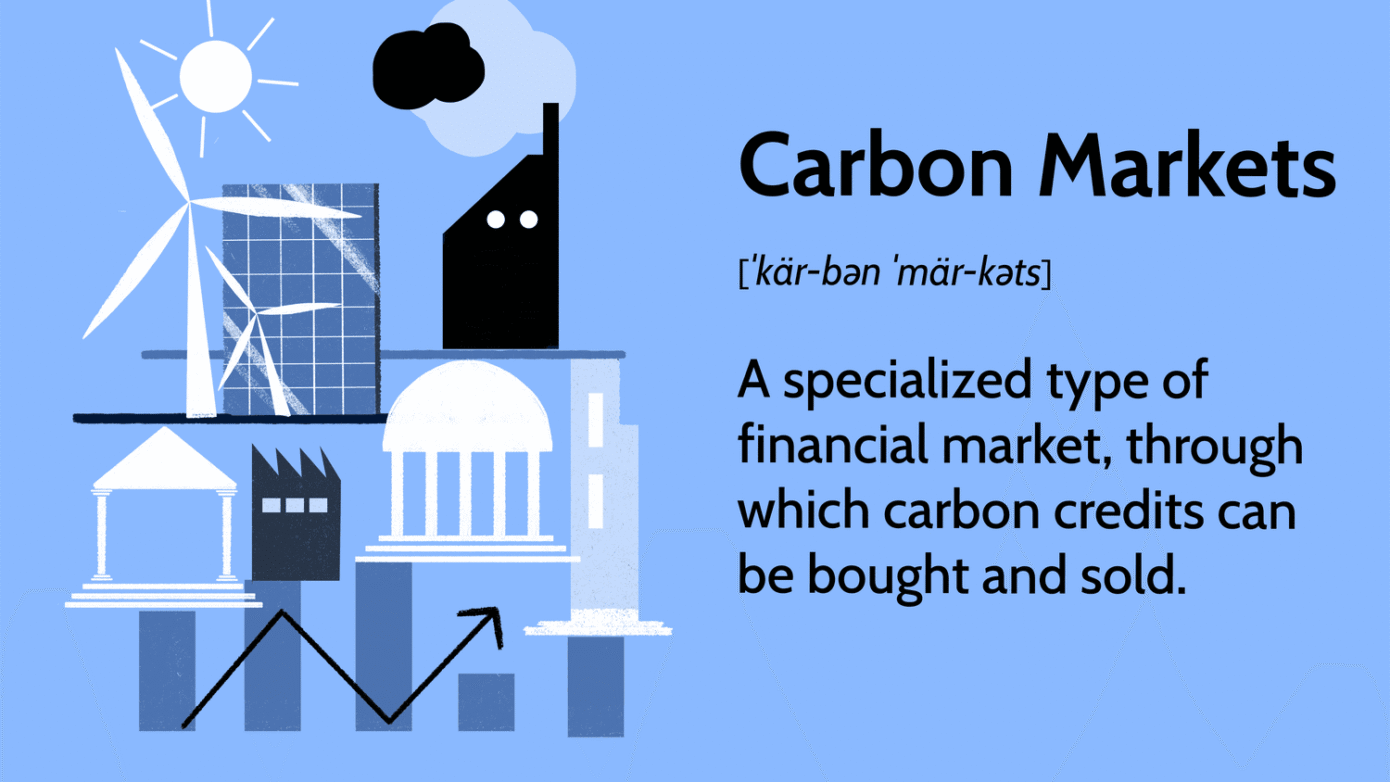
Carbon markets attract attention for one reason: money. Credits, funding, project revenues, and the promise of turning sustainability into a tradable asset. That promise can be useful, but it also creates a dangerous temptation. Many organisations approach carbon markets as a shortcut to climate action, a way to claim progress without doing the harder work of reducing emissions and building credible systems.
That is why the most important way to understand carbon markets is not as a climate solution, but as an accountability system. When they are well designed and well governed, they reward integrity. When they are poorly governed, they reward storytelling, and then disappoint everyone who relied on the story.
What carbon markets are really doing
At their core, carbon markets try to do a simple thing: put a value on emissions reductions or removals and make that value tradeable. But the market only works if what is being traded is real.
This is where accountability comes in. Carbon markets only function when they can answer three questions with confidence:
-
What happened?
-
How do we know?
-
Who is responsible if the claim is wrong?
If those questions cannot be answered, the market becomes a reputational risk machine.
The integrity chain: Governance, MRV, Finance
A useful way to think about carbon market integrity is as a chain with three links. Weakness in any one link undermines the whole system.
1) Governance: who sets the rules and who enforces them
Governance is the difference between a market and a marketing campaign.
Strong governance provides:
-
clear eligibility criteria for projects
-
transparent approval and oversight processes
-
rules for conflicts of interest
-
enforcement, sanctions, and corrective actions when claims fail
-
clarity on roles, including who authorises projects, who verifies outcomes, and who issues credits
Weak governance produces the opposite. It creates loopholes, inconsistency, and a system where influence can matter more than evidence. That is when trust collapses, and when it collapses, the value of credits collapses with it.
2) MRV: the discipline that proves what happened
MRV stands for Measurement, Reporting, and Verification, and it is the backbone of credibility.
If governance is the rules, MRV is the proof.
A credible MRV system typically includes:
-
a defensible baseline, showing what would have happened without the project
-
clear methods for measurement, including boundaries, data sources, and assumptions
-
reporting that is complete and consistent
-
verification that is independent and properly documented
This is where many projects fail. Organisations want the upside of credits, but they underestimate the time and discipline needed to build MRV that can survive scrutiny.
The hard truth is that carbon markets do not pay for ambition. They pay for evidence.
3) Finance: where incentives can strengthen or weaken integrity
Finance is often presented as the benefit of carbon markets, but it is also the biggest risk.
When money arrives before integrity, behaviour shifts in the wrong direction. Organisations begin optimising for credit issuance rather than real climate impact. That is when carbon markets become a shortcut in practice, even if they were not designed to be one.
Strong market design aligns finance with integrity by:
-
rewarding long-term performance, not just early issuance
-
ensuring transparency of credit quality and project risks
-
discouraging double counting and unclear ownership
-
requiring clear documentation before monetisation
A simple principle works here: the more financial value you attach to a claim, the stronger your accountability system must be.
Why this matters for organisations, not just regulators
Many organisations think carbon markets are mainly a regulator’s problem. They are not.
Carbon market credibility affects:
-
access to climate finance and concessional funding
-
reputation with customers and the public
-
investor confidence and scrutiny
-
supply chain relationships, especially with multinationals
-
internal governance, because weak carbon claims can undermine broader sustainability reporting credibility
If your organisation is making sustainability claims in any form, your credibility is only as strong as your weakest evidence trail.
The two mindsets: shortcut thinking vs accountability thinking
Shortcut thinking sounds like:
-
“Let’s find a carbon project quickly.”
-
“We need credits for our net-zero story.”
-
“We can fix the data later.”
Accountability thinking sounds like:
-
“What is our baseline, and can we defend it?”
-
“Who owns carbon data internally?”
-
“What will verification test, and are we ready?”
-
“What claims are we prepared to make, and which should wait?”
The difference is not language. The difference is outcomes.
Shortcut thinking produces fragile credibility. Accountability thinking produces durable value.
What good looks like: readiness before monetisation
Organisations that succeed in carbon markets tend to follow the same sequence:
-
Readiness
Clear governance, roles, and internal accountability for carbon data. -
Integrity
Defensible baselines, credible MRV, and verification discipline. -
Monetisation
Only then do credits, incentives, or financing become sustainable.
This sequencing is not just technical. It is reputational protection. If you monetise first and build integrity later, you may earn early revenue but face long-term risk when scrutiny arrives.
A practical checklist for leadership teams
If you are considering carbon market participation, pressure-test your readiness with five questions:
-
Do we have a clear governance structure for carbon projects, with named owners and decision rights?
-
Is our baseline defensible, and have we documented all assumptions?
-
Do we have an MRV approach that can be verified independently, with reliable data sources?
-
Can we trace claims and credit ownership clearly, to avoid double counting or dispute?
-
Are we prepared to delay claims and monetisation until evidence is strong?
If the answer to any of these is no, the next step is not a project launch. The next step is system building.
The bottom line
Carbon markets can play a useful role in climate finance and emissions reduction, but only when they operate as accountability systems. They are not shortcuts. They are integrity mechanisms.
For organisations, the smart move is not to chase credits. It is to build readiness. When governance is clear, MRV is defensible, and finance is aligned to integrity, carbon markets can reward real performance. Without those foundations, the same markets that promise value can become sources of reputational and regulatory exposure.
If you want carbon market participation to create durable value, start where credibility begins: governance, then MRV, then finance.