


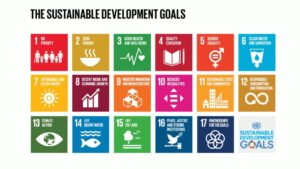
 When the Sustainable Development Goals (SDGs) were adopted in 2015, the world set out an ambitious vision—to eradicate poverty, protect the planet, and ensure prosperity for all by 2030. Now, with just five years to go, the question remains: Is Nigeria on track to achieve these goals?
The reality is sobering. Despite some progress, Nigeria—like much of Africa—is still not on track as planned in key areas such as poverty reduction, healthcare, education, and climate action. Economic instability, governance challenges, and external factors such as climate change and global conflicts have further slowed progress.
However, the deadline has not yet passed. With the right policies, investments, and collective action, Nigeria can still make significant strides toward achieving the SDGs.
Where Nigeria Stands on Key SDGs
Nigeria has made commitments to align its national development priorities with the SDGs, but progress has been slow and uneven. Despite various government initiatives, funding allocations, and international partnerships, many critical indicators show that Nigeria is still far from meeting the 2030 targets.
Here is a look at where we stand on some of the most pressing SDGs:
SDG 1 – No Poverty
- Over 60% of Nigerians still live in multidimensional poverty (National Bureau of Statistics, 2022).
- Economic downturn, high inflation, and unemployment rates have worsened living conditions, pushing more people into extreme poverty (World Bank, 2023).
- The National Social Investment Programme (NSIP) has provided support for vulnerable groups, but funding gaps and governance issues remain (Federal Ministry of Humanitarian Affairs, 2024).
SDG 2 – Zero Hunger
- Over 25 million people in Nigeria are at risk of hunger due to climate change, conflict, and poor agricultural productivity (UN Food and Agriculture Organization, 2024).
- Nigeria still heavily relies on food imports, despite efforts to boost local production through the Anchor Borrowers’ Programme (CBN, 2023).
SDG 3 – Good Health and Well-being
- Nigeria has one of the highest maternal mortality rates in the world, with 512 deaths per 100,000 live births (World Health Organization, 2023).
- Public healthcare remains underfunded, with only 5% of the national budget allocated to health (Budget Office of the Federation, 2024).
- Access to quality medical services is still limited in rural areas, with doctor-to-patient ratios far below WHO recommendations.
SDG 4 – Quality Education
- Nigeria has the highest number of out-of-school children in the world, estimated at 20.2 million (UNESCO, 2024).
- Insecurity, inadequate school infrastructure, and poor funding have stalled educational progress, especially in conflict-prone regions.
SDG 7 – Affordable and Clean Energy
- Over 85 million Nigerians lack access to reliable electricity, making Nigeria one of the least electrified countries globally (World Bank, 2023).
- However, initiatives like the $200 million renewable mini-grid project offer hope for improved energy access, particularly in rural areas (Reuters, 2025).
SDG 13 – Climate Action
- Nigeria is experiencing more frequent and severe climate events, from extreme heatwaves to devastating floods (Nigeria Meteorological Agency, 2024).
- Despite launching the Nigeria Energy Transition Plan, implementation has been slow, and adaptation funding remains inadequate (Federal Ministry of Environment, 2024).
With these indicators, it is evident that Nigeria has not made significant progress towards achieving the SDGs. While some initiatives have been introduced, many challenges—ranging from poor policy implementation to inadequate funding—continue to slow down progress. If Nigeria is to make any meaningful advancements before 2030, immediate and strategic action is required.
Is the 2030 Deadline Still Achievable?
Given the current trajectory, it is highly unlikely that Nigeria will achieve all 17 SDGs by 2030. However, that does not mean actions being taken should not continue. Countries that accelerate action now can still make meaningful improvements that lay the foundation for long-term development beyond 2030.
To achieve this, Nigeria must:
- Reprioritise Development Goals – Focus on high-impact areas such as poverty alleviation, education, healthcare, and energy access.
- Increase Investments in Key Sectors – Scale up funding for infrastructure, agriculture, and renewable energy to support long-term sustainability.
- Strengthen Governance and Accountability – Transparent policies and improved governance structures are critical for ensuring that SDG-related investments yield real results.
- Leverage Public-Private Partnerships – The government alone cannot drive the SDGs. Businesses, civil society, and international partners must play a larger role in financing and implementing sustainable development projects.
- Enhance Data Collection and Monitoring – Accurate data is essential for tracking progress and identifying gaps. Nigeria must invest in reliable, real-time data systems to guide decision-making.
The Role of CSR-in-Action in Driving Sustainable Development
At CSR-in-Action, we believe that sustainability is not just a global agenda—it is a national necessity. Through policy advocacy, capacity building, and stakeholder engagement, we are committed to supporting businesses, government institutions, and communities in advancing the SDGs.
- Promoting responsible business practices through ESG-focused training and initiatives.
- Driving environmental sustainability by advocating for cleaner energy solutions and climate action policies.
- Fostering inclusive economic development by supporting women-led enterprises and social impact programs.
However, it must be emphasised that achieving the SDGs is a collective effort. If Nigeria is to meet its 2030 targets, now is the time for action.
The Deadline is Looming—Will Nigeria Step Up?
With only five years left, the window for transformative action is closing fast. While the full achievement of the SDGs by 2030 may be unrealistic, significant progress is still possible if Nigeria accelerates its efforts.
The choices we make today will determine whether we build a sustainable, inclusive future—or leave the next generation to face even greater challenges.
What steps do you think Nigeria should take to speed up SDG implementation?
References
- Reuters. Nigeria strikes $200 million deal to power rural areas with renewable mini-grids. Read more.
- Federal Ministry of Humanitarian Affairs, Disaster Management and Social Development
- FAO Nigeria
- Central Bank of Nigeria: Implements monetary policy and provides financial data, including initiatives like the Anchor Borrowers’ Programme. Central Bank of Nigeria